
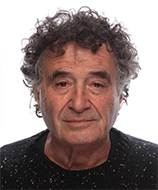
 After graduating in Political Science Rudolf made his first professional documentary, 'Algerian Times', in 1976. Driven by political engagement, the enchanting romanticism of revolution and a lust for expression, this film became more than a political statement - it is a simple lyrical study in cinematic means. The drive not to just tell a story but to express its underlying reality can be found throughout Rudolf's extensive oeuvre which mainly deals with "Man in search of what cannot be found".
Rudolf's most discussed and renowned documentaries are 'The Alien's Place' (highly praised by NYT's Vincent Canby), 'Sal Santen Rebel' and, more recently 'Hamartía'.
Being a successful documentary maker awakened Rudolf's old juvenile wish to follow in the footsteps of his idols Ingmar Bergman and Pier Paolo Pasolini. In 1980, determined to learn more about feature film, he took the night bus to Italy. In Rome, he managed to get in touch with Italian director Marco Ferreri who offered him a humble position on his set. A decisive experience. In the famous studios of Cinecitta Rudolf got the chance to witness the director's craft, the meticulous process of staging scenes and the interaction between mise-en-scene and photography. And, equally importantly, it taught Rudolf that it is the essence of film as an art form not to simply show reality, but to express the invisible dimensions of reality.
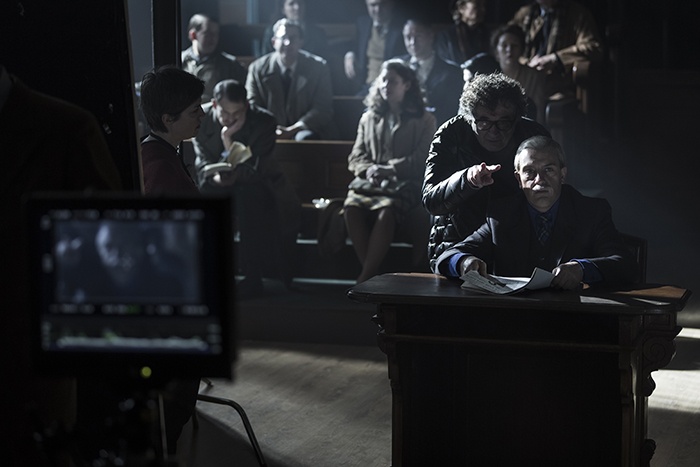
Rudolf van den Berg on the set of A Real Vermeer
Two years later Rudolf directed his first feature film, 'Bastille', for which he received the Grand Prix of the Dutch film. More feature films and awards followed while Rudolf showed his diversity as a filmmaker. Next to more sophisticated films like 'Evenings' he proved his capability for creating suspense and romance with 'Looking for Eileen'. With the unusual 'The Johnsons' he made a horror film that still enjoys a modest worldwide cult status.
 When, in 1996, Rudolf's English spoken films 'The Cold Light of Day' and 'For My Baby' were doing well internationally but not in The Netherlands, Rudolf decided to try his luck in the US. In Los Angeles he met renowned film producer Pierre Spengler. Together they made the film 'Snapshots', starring Burt Reynolds and Julie Christie.
Between 'Snapshots' and 'Tirza' Rudolf began to focus more and more on writing and adapting screenplays. Although he still feels the influence of old heroes such as Bergman and Pasolini, he has also learned a lot from watching films by new heroes like the Coen brothers, Almodovar and Iñárritu.
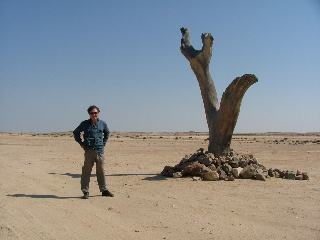
In 2007, after reading 'Tirza' by Dutch novelist Arnon Grunberg, Rudolf knew he had to make a feature film again. The image of a white man with a little black girl at his side roaming the desert looking for his missing daughter refused to let go of him. His company Cadenza Films acquired the film rights, Rudolf wrote the screenplay and soon the funding for the film was secured. In a solid coproduction with Dutch partner FuWorks 'Tirza' was produced by Cadenza Film's Jeroen Koolbergen and Fu Works' San Fu Maltha. In 2012, the same team brought 'Süskind' to the screen. A controversial view on the annihilation of the Dutch Jewry, a stunning film experience.